
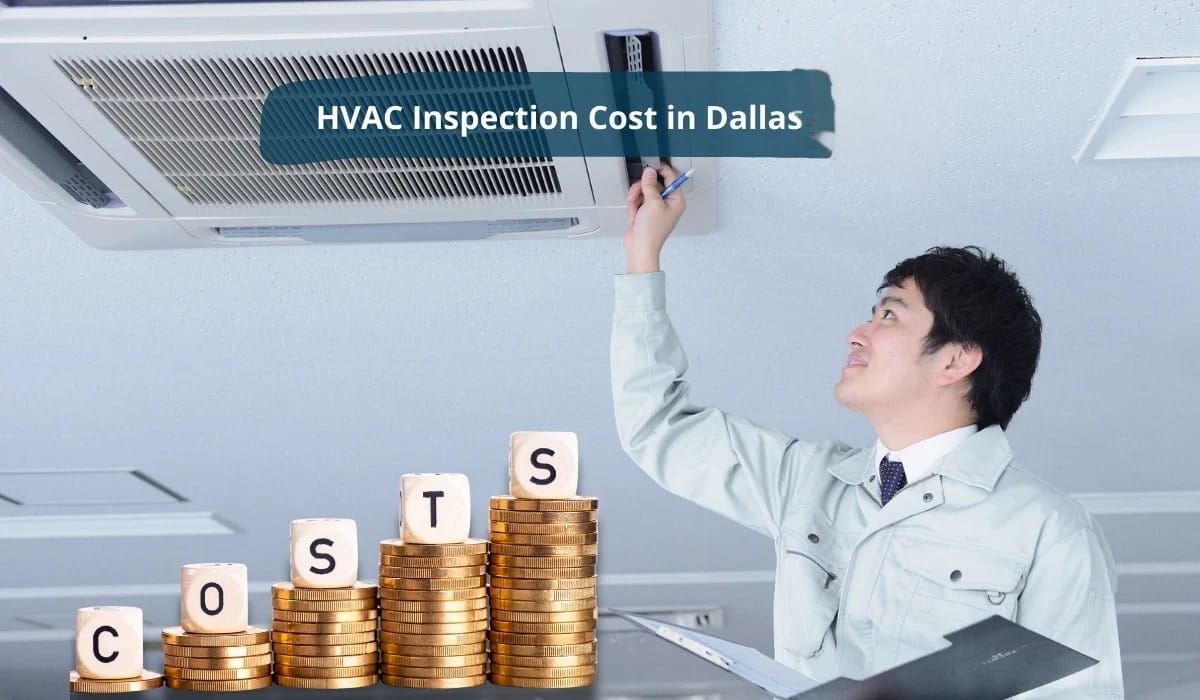
If you’re a Dallas homeowner, a professional HVAC inspection is a smart way to protect comfort and budget. In 2026, the average HVAC inspection cost in Dallas ranges from $250 to $450, typically around $300, depending on your HVAC system, home size, and inspection scope.
A thorough inspection keeps your heating and cooling system running efficiently, prevents costly repairs, and helps lower energy bills.
This guide covers HVAC inspection cost, what influences pricing, what you can expect to pay during an inspection, and how regular checks save money while ensuring system reliability.
| Key Takeaways
|
What Is An HVAC Inspection
An HVAC inspection is a professional checkup of your heating and cooling system to ensure it operates safely and efficiently.
What an inspection involves:
- Checking air ducts, furnace inspection, air conditioner inspection, and boiler inspection, if applicable.
- Reviewing electrical components and roof vent inspection for safety.
- Performing tests to verify your system is running optimally.
Time Required: Typically 1-2 hours, depending on system complexity and number of units.
Importance of Regular Inspections and Cost Savings
Living in Dallas means your HVAC system works harder than in many other cities. Long, hot summers strain your air conditioning system, and chilly winter nights demand a reliable heating system. That’s why regular HVAC inspections are essential.
According to U.S. Department of Energy, regular maintenance keeps your HVAC system running efficiently and lowers energy bills. Neglecting these tasks can reduce performance and lead to costly repairs.
Why inspections matter for cost savings:
- Identify minor issues before they become costly repairs.
- Replace air filters or detect duct leaks to prevent higher energy bills.
- Maintain indoor air quality and comfort for your family.
Getting an HVAC system inspected professionally lets a certified HVAC Technician:
- Examine your home’s HVAC system thoroughly.
- Ensure the system is running safely and efficiently.
- Help you plan your HVAC maintenance budget and avoid unexpected expenses.
6 Factors Affecting HVAC Inspection Cost in Dallas
The HVAC inspection cost near Dallas can vary widely depending on several important factors.
By considering these variables, Dallas homeowners can ensure their home’s HVAC system runs efficiently, avoid costly repairs, and maintain energy efficiency year-round.
1. System Type and Complexity
Different types of HVAC systems require varying levels of inspection effort, which directly impacts the HVAC inspection price.
- A standard air conditioner inspection or furnace inspection is simpler and usually quicker, keeping costs lower.
- In contrast, a heat pump inspection or boiler inspection involves more detailed checks, including condenser and evaporator coils, refrigerant levels, electrical components, and system safety checks, which naturally raise the HVAC system inspection cost.
- Homes with advanced air conditioning systems or combined heating and cooling systems may require a more thorough full HVAC inspection to ensure all components are functioning efficiently.
2. Home Size and Multiple Units
The size of your home and the number of HVAC units significantly affect inspection costs.
- Larger homes or properties with multiple units take longer to inspect. Each AC unit, furnace, or heat pump adds labor time, increasing the HVAC inspection cost.
- Dallas homes range from compact townhomes to multi-level properties with multiple air conditioning systems, so inspection costs near Dallas can vary accordingly.
- Homes with additional features like attic fans or complex air ducts may require extra time for roof vent inspections or air duct inspections.
3. System Age and Condition
Older HVAC systems often require more extensive evaluation, affecting both labor costs and overall inspection pricing.
- Vintage HVAC units may have worn electrical components, outdated wiring, or duct leakage issues, which can increase the HVAC system inspection cost.
- Homes in older Dallas neighborhoods often have these legacy systems, making careful professional inspections essential to prevent costly repairs and ensure the air conditioning system and heating systems are running efficiently.
- Regular inspection of aging systems helps maintain indoor air quality, prevent carbon monoxide leaks, and extend the lifespan of your HVAC unit.
4. Residential vs Commercial Systems
Commercial HVAC inspection cost is generally higher due to larger, more complex systems.
- Commercial setups may include multiple heating and cooling systems, extensive air ducts, and advanced components like boilers or heat pumps, requiring more time and specialized equipment.
- In Dallas, office buildings, retail stores, and industrial facilities often need attic fan inspections, roof vent inspections, and full HVAC inspections to maintain energy efficiency and safe operation.
- The higher inspection costs for commercial systems reflect the additional effort and expertise required by professional HVAC inspectors.
5. Specialized Testing and Safety Checks
Optional inspections increase cost but deliver significant benefits for safety and efficiency:
- Duct leakage tests to prevent energy loss
- Carbon monoxide leak detection for home and family safety
- Attic fan inspections to improve airflow and system efficiency
- Comprehensive full HVAC inspection of air ducts, condenser and evaporator coils, and electrical components
Dallas homeowners face extreme heat in summer and occasional cold in winter. Early detection of inefficiencies through specialized inspections prevents energy bills from spiking and keeps the heating and air conditioning system performing at peak efficiency.
6. Location and Travel Considerations
While Dallas has many certified HVAC technicians, the HVAC inspection cost near Dallas can be affected by travel and accessibility:
- Homes in suburban areas, gated communities, or older districts may require extra travel time or equipment setup.
- Larger properties or multi-unit homes may require longer professional inspections, increasing labor costs.
- Planning ahead and hiring a local HVAC company can help keep costs predictable while ensuring a comprehensive HVAC inspection.
Average Cost of HVAC Inspection in Dallas
In Dallas, homeowners can expect to pay between $250 and $450 for a professional HVAC inspection, depending on the type of HVAC system, home size, and inspection complexity.
Average cost ranges for 2026:
| Type of Inspection | Typical Cost Range | Notes |
| Residential HVAC | $250 – $400 | Standard air conditioner + furnace |
| Commercial HVAC | $400 – $550 | Larger, more complex heating and cooling systems |
| Heat Pump Inspection | $300 – $450 | Includes condenser and evaporator coils checks |
| Complete HVAC Inspection | $350 – $500 | Comprehensive professional inspection with air ducts and roof vent inspection |
HVAC System Inspection Cost vs AC System Inspection Cost in Dallas
When budgeting for inspections in Dallas, it’s important to understand the difference between a full HVAC system inspection and an AC system inspection. Both play a critical role in maintaining comfort and safety, but they vary in scope, time, and cost.
HVAC System Inspection Cost
A professional HVAC system inspection evaluates the entire heating, ventilation, and air conditioning system. This includes:
- Furnace inspection or boiler inspection
- Air conditioner inspection and heat pump inspection
- Air ducts, condenser and evaporator coils, and roof vent inspection
- Electrical components and safety checks, including carbon monoxide leak detection
Because a full HVAC inspection covers multiple components, requires more time, and often uses specialized equipment, the inspection cost is higher than an AC-only inspection. In Dallas, the typical HVAC system inspection cost ranges from $300 to $500, depending on system complexity, age, and number of units.
AC System Inspection Cost
An air conditioner inspection focuses only on the cooling components of your HVAC unit. This includes:
- Checking the air conditioner or heat pump
- Inspecting condenser and evaporator coils
- Testing refrigerant levels and airflow
- Inspecting air ducts and air filters related to cooling
Since this inspection is more limited, the AC system inspection cost is lower, generally ranging from $150 to $300 in Dallas. It’s ideal for homeowners who want to maintain air conditioning efficiency during long, hot summers but do not need a full heating check.
Choosing the Right Inspection
For Dallas homeowners, the choice depends on your priorities:
- If you want to protect both heating and cooling systems, a full HVAC system inspection is the most comprehensive option.
- If your focus is mainly on cooling performance and summer comfort, an AC system inspection may be sufficient.
- Consider your home’s age, size, and number of units, as these factors influence overall inspection costs.
Learn More: Maintenance, Repairs, and Long-Term Costs
Regular maintenance is one of the smartest ways to protect your home’s HVAC system and control long-term expenses. A well-maintained system not only runs efficiently but also prevents unexpected, costly repairs, keeping your HVAC inspection costs manageable over time.
Key considerations for Dallas homeowners:
Scheduled Maintenance
After a professional HVAC inspection, following a routine maintenance schedule prolongs system life. In Dallas, where summers can push air conditioning units to their limits, regular maintenance prevents unnecessary wear and reduces future repair costs.
Energy Savings
A well-maintained heating and cooling system operates efficiently, which can significantly lower energy bills. Regular inspections of air ducts, air filters, and condenser and evaporator coils ensure maximum performance.
Repairs and Preventive Action
Inspections often reveal necessary repairs before they escalate. Hiring a certified HVAC technician ensures work is done correctly and often comes with warranty coverage, protecting your investment.
Budgeting for Maintenance
Planning inspections and minor repairs allows you to manage your HVAC maintenance budget, avoiding emergency expenses and higher costs.
Emergency Inspections and Their Cost Impact
Emergencies can happen without warning. In Dallas, extreme summer heat or sudden cold snaps can quickly turn minor HVAC issues into urgent problems.
Why emergency inspections are more expensive:
Immediate Response: Technicians must prioritize urgent calls, often outside normal hours, increasing labor costs.
Complex Troubleshooting: Emergency situations may require specialized tools and extra time to identify issues quickly.
Safety Risks: Problems such as carbon monoxide leaks or electrical faults require careful handling to prevent damage or injury.
Benefits of addressing emergencies promptly:
- Prevents costly repairs from system failure that could have been avoided with regular inspections.
- Ensures your air conditioning system or heating system continues running safely.
- Maintains efficiency, preventing spikes in energy bills.
DIY HVAC Inspections vs. Professional Costs
Many homeowners attempt DIY HVAC inspections to save money, but these checks cannot replace the thoroughness of a professional inspection.
DIY inspections can include:
- Replacing air filters
- Visually inspecting air ducts
- Listening for unusual noises
- Checking thermostat settings
Why a professional inspection is worth the investment:
- Certified HVAC technicians detect hidden issues that DIY checks often miss.
- Professional inspections cover a full HVAC inspection, including furnace inspection, boiler inspection, roof vent inspection, and attic fan inspection.
- A professional HVAC inspection guarantees your HVAC system is running efficiently, reducing long-term repair costs.
HVAC Inspection Cost for Dallas Homebuyers
If you are buying a home in Dallas, understanding home HVAC inspection costs is critical to protecting your investment and ensuring you budget appropriately.
Why inspections are essential for buyers:
- Provides an accurate picture of heating and cooling systems before closing.
- Offers cost estimates for necessary repairs, giving you leverage during price negotiations.
- Confirms safe operation of air conditioning systems and heating systems, protecting your family.
HVAC Inspection Checklist
An HVAC inspection checklist helps you understand what’s included and why costs may vary. For Dallas homeowners, this ensures that your HVAC system runs efficiently through extreme temperatures.
Key components of a professional inspection:
- Air Conditioner Inspection
- Furnace Inspection
- Boiler Inspection
- Air Duct Inspection
- Roof Vent Inspection
- Attic Fan Inspection
- Thermostat Check
- Safety Checks
- Air Filter Check
What Are The Benefits of Regular HVAC Inspections
Regular HVAC inspections provide more than just peace of mind; they protect your wallet and home comfort.
Primary benefits:
Prevent Costly Repairs: Catch small problems before they escalate into expensive issues.
Energy Savings: A well-maintained system runs more efficiently, lowering energy bills in Dallas heat and cold snaps.
Extended System Lifespan: Regular inspections reduce wear on your HVAC unit.
Improved Indoor Air Quality: Clean air ducts and air filters keep your home healthier.
Safety: Detect carbon monoxide leaks, faulty electrical components, and other hazards.
5 Signs You Need an HVAC Inspection
Knowing the signs that your home’s HVAC system needs attention can help you avoid higher inspection costs and costly repairs later.
Common indicators:
- Unusual Noises or Smells – Clicking, rattling, or burning smells may indicate worn parts or airflow issues.
- Temperature Fluctuations – Rooms that are too hot or cold suggest problems with your air conditioning system or heating system.
- Higher Energy Bills – Spikes in energy bills often signal reduced system efficiency.
- Water Leaks or Moisture – Leaks near the AC unit or furnace can lead to damage and increased repair costs.
- Poor Airflow – Weak or uneven airflow may point to clogged air ducts or failing components.
How Often to Inspect Your HVAC System
The frequency of inspections affects both system efficiency and your HVAC maintenance budget.
Recommended schedule:
Standard Home HVAC Systems: At least once a year, ideally before the cooling or heating season.
Older Systems: Homes with older air conditioning units or furnaces may need more frequent inspections.
Extreme Dallas Weather: Hot summers or sudden cold snaps make regular inspections critical to avoid costly repairs.
Commercial Systems: Larger or complex heating and cooling systems may require inspections twice a year.
Finding and Hiring a Professional HVAC Inspector
Hiring the right HVAC professional ensures you get a thorough inspection and accurate cost estimate.
Tips for Dallas homeowners:
Check Credentials: Hire a certified HVAC technician with proper licenses.
Read Reviews: Look for local HVAC companies with strong customer feedback.
Ask for Referrals: Friends, family, or neighbors may recommend trusted HVAC contractors.
Compare Quotes: Get multiple quotes to understand inspection costs and services included.
Comprehensive Reports: A reputable inspector provides a detailed full HVAC inspection report and notes necessary repairs.
Conclusion
Regular HVAC inspections are essential for Dallas homeowners and business owners. They:
- Keep your air conditioning system and heating system running efficiently.
- Prevent costly repairs and unexpected emergency expenses.
- Improve energy efficiency and maintain indoor air quality.
- Provide peace of mind through a professional HVAC inspection conducted by certified HVAC technicians.
By understanding HVAC inspection cost, scheduling regular inspections, and following a HVAC maintenance checklist, you protect your comfort, safety, and wallet year-round.
FAQs
What Is Included in the Average Cost of HVAC Inspection in Dallas?
A typical inspection includes air conditioner inspection, furnace inspection, air ducts, thermostat checks, roof vent inspection, and safety tests like carbon monoxide leak detection.
Why Does Commercial HVAC Inspection Cost More Than a Home Inspection?
Commercial systems are larger, more complex, and may require multiple units. This increases labor time and equipment needs, leading to higher inspection costs.
Can Regular Inspections Really Lower Long-Term HVAC Repair Costs?
Yes. Regular inspections detect small issues before they escalate, reducing the risk of costly repairs and maintaining HVAC system efficiency, saving on energy bills.
How Much Does an Average Cost Emergency HVAC Inspection in Dallas?
Emergency inspections can cost more due to immediate response, after-hours service, and rapid diagnostics. Prompt professional attention prevents bigger expenses.
Is an Annual Maintenance Plan Cheaper Than Paying for Inspections Separately?
An annual maintenance plan often bundles multiple inspections and minor repairs, making it more cost-effective than paying for individual professional HVAC inspections.
