
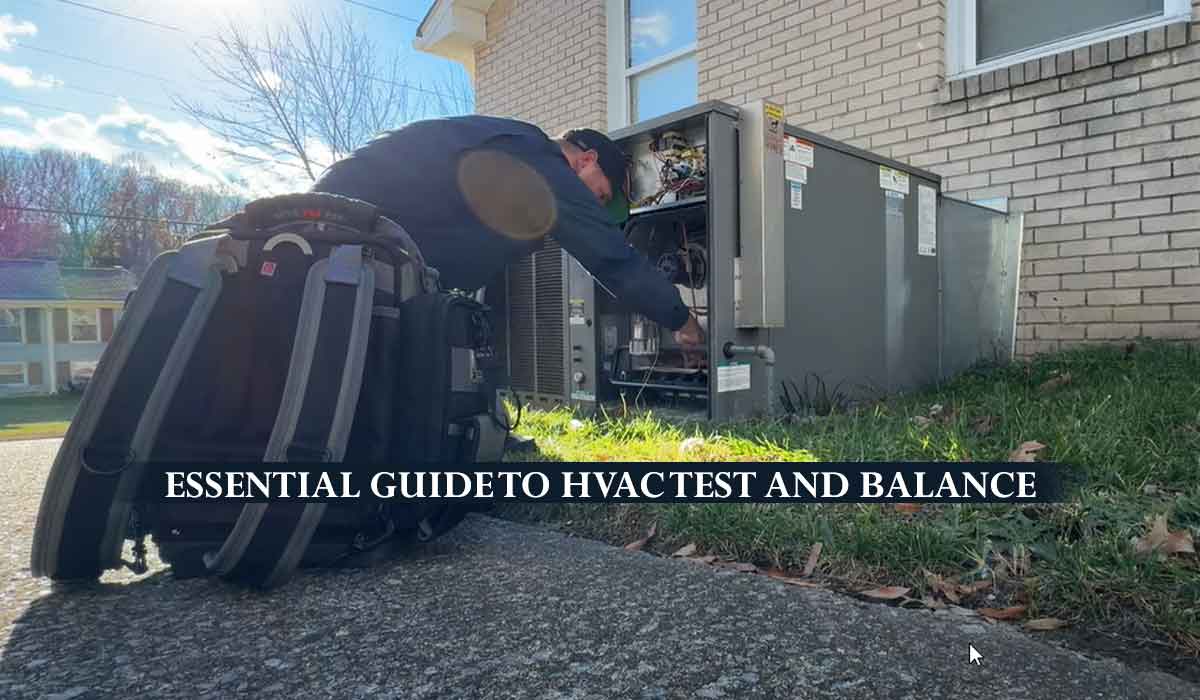
Test, adjust, and balance are used to verify that an HVAC system delivers the correct amount of air and water flow to every room for building owners . The process is defined in ASHRAE Standard 111 and the NEBB Procedural Standard, both regarded as industry standards.
TAB technicians do the following:
- Take air and hydronic measurements,
- Compare them with the design flow values required,
- Fine-tune fan speeds, pump curves, and
- Balancing devices until the system meets the designed parameters.
Keep reading to learn how HVAC TAB works and why it benefits Dallas buildings, especially in terms of air conditioning .
Key Takeaways
|
What Is HVAC Test and Balance?
Test, adjust, and balance are used to verify that an HVAC system delivers the correct amount of air and water flow to every room. The process is defined in ASHRAE Standard 111 and the NEBB Procedural Standard, both regarded as industry standards.
TAB technicians do the following:
- Take air and hydronic measurements,
- Compare them with the design flow values required,
- Fine-tune fan speeds, pump curves, and
- Balancing devices until the system meets the designed parameters.
Why Dallas Buildings Need HVAC Testing and Balancing
Dallas has adopted the 2021 International Mechanical Code (IMC) with local amendments. It requires flow testing to meet design requirements where the code official deems it necessary. Combined with the city’s high cooling loads, that makes testing and balancing HVAC not only a good practice but often a code obligation.
Local climate also drives up energy consumption. A Lawrence Berkeley National Laboratory study found that a well-executed commissioning process, which includes TAB as part of regular HVAC maintenance , yields 16% median energy savings in existing buildings and 13% in new construction. Those savings translate straight into lower energy costs and better environmental performance.
How to Test and Balance HVAC Systems in Dallas
Certified TAB technicians follow a structured, step-by-step process to ensure HVAC systems operate efficiently, meet design flow values, and comply with local Dallas codes. The process includes major phases (Testing, Adjusting, Balancing) and all sub-steps within each phase.
- Testing: Measure air flow, air pressure, water flow, temperature, humidity, and carbon dioxide levels at each critical point.
- Adjusting: Fine-tune system components like dampers, valves, and variable-speed drives, to hit design flow values and solve airflow issues.
- Balancing: Lock in settings, verify stability, and document results in a comprehensive written report.
After these steps, a certified professional signs off, and the TAB contractor submits the final report to the mechanical engineer and building owners.
How to Test and Balance HVAC Systems
Every HVAC test and balance job follows the same disciplined path. Certified technicians gather data, make precise tweaks, and confirm that the final numbers match the design requirements. You can consider the following concise roadmap to understand how to test and balance HVAC equipment.
1. Testing Phase
- Baseline Measurements: Record air flow, temperature, humidity, and air pressure at key supply, return, and exhaust points. For hydronic loops, log water flow and differential pressure.
- Duct and System Leak Testing: Seal obvious gaps, then run low-pressure tests to locate hidden leaks. This improves indoor air quality and energy efficiency.
- Air and Water Flow Verification: Use calibrated instruments to measure air at diffusers and grilles and water at coils and heat exchangers.
2. Adjusting Phase
- Component Tweaks: Fine-tune fan speeds, dampers, valves, and variable-speed drives to match design flow requirements.
- Hydronic Balancing: Adjust balance valves or circuit setters to achieve proper water distribution.
- Controls and Safeties: Verify that all controls, sensors, and safety devices operate correctly.
3. Balancing Phase
- Final Verification: Re-check all air and water flows to ensure stability and compliance with design parameters.
- Documentation: Compile detailed reports listing measurements, adjustments made, and any deficiencies corrected.
- Owner Walkthrough: Review damper positions, system operation, and maintenance tips with building staff.
What Are the Benefits of HVAC Test and Balance?
A proper HVAC test and balancing project delivers value in four vital areas:
| Benefits | Improvements | Real-World Results |
| Efficiency | Equipment and system performance | Lower energy consumption and utility bills |
| Indoor Comfort | Even air flow and temperature | Fewer complaints about inconsistent temperatures |
| Health and Indoor Air Quality | Controlled air and water flow, stable air pressure | Reduced pollutants, healthier enclosed space |
| Longevity | Balanced system components | Less wear on motors, belts, and coils |
When and How to Schedule TAB in Dallas
For Dallas commercial buildings and existing residential spaces, HVAC test and balance (TAB) is not a one-time task. Regular TAB ensures proper operation, stabilizes airflow issues, and improves indoor comfort across various rooms.
Existing buildings benefit from retesting for hydronic system balancing every 3 to 5 years, or immediately after major renovations, equipment upgrades, or changes in occupancy. New construction should complete the TAB process before occupancy, with results verified at the end of the commissioning process to ensure compliance with design specifications and industry standards.
Key Triggers for Scheduling TAB
- Equipment upgrades: Installing new HVAC equipment, chillers, air handlers, or variable-speed drives changes airflow, air and water flow, and fan speeds, requiring recalibration.
- Changes in building use or manufacturing processes: Adjustments in heat loads, manufacturing processes, or occupancy may cause inconsistent temperatures and impact energy consumption.
- Tenant complaints or HVAC sound issues: Reports of uneven temperatures, HVAC sound, or discomfort highlight the need for air balancing and system adjustments.
- Indoor air quality concerns: Elevated carbon dioxide, poor air quality, or lack of fresh air indicate imbalances in air and hydronic measurements and duct system leak testing requirements.
How to Choose Certified TAB Contractor in Dallas
Not every technician has the training, tools, or certifications to meet Dallas code and industry standards. Selecting a certified professional TAB contractor ensures HVAC systems operate efficiently, meet design flow values, and deliver consistent indoor comfort while improving energy efficiency and environmental performance.
When evaluating firms, building owners should look for TAB contractors that:
- Hold NEBB or AABC certification: Confirms adherence to testing, adjusting, and balancing procedural standards and industry standards.
- Provide clear TAB services: Outlines TAB work, written reports, major steps, schedule, and deliverables, including verification of design flow values required.
- Use calibrated instruments: Accurate air and hydronic measurements are essential for airflow issues, air balancing, and achieving optimal performance.
- Include a mechanical engineer review: For complex HVAC systems, having a mechanical engineer review and seal reports ensures compliance with design specifications and optimum performance.
Schedule your Dallas HVAC test and balance today to maximize energy efficiency, indoor air quality, and long-term HVAC system performance, preventing cold spots, inadequate insulation, or uneven heating and cooling in your enclosed space.
Final Thoughts
When properly executed, HVAC testing and balancing transform a collection of ducts, pumps, and controls into a finely tuned system. The payoff is clear: lower energy consumption, healthier indoor air quality, and fewer cold spots across your facility.
Whether you manage an office, a school, or a high-tech manufacturing floor in Dallas, scheduling a professional HVAC test and balance is a smart, data-backed decision that pays dividends in comfort, compliance, and cost savings.
FAQs
What Is Test And Balance HVAC?
It’s a methodical process to measure, adjust, and balance air and water flow in a building’s HVAC system to meet design specifications.
How To Test And Balance HVAC?
Certified TAB technicians follow a structured path: baseline measurements, duct leak testing, air and hydronic balancing, system optimization, and final reporting.
What Is An HVAC Balance Test?
A targeted evaluation that confirms the HVAC system delivers correct air and water flow to every zone, ensuring efficiency and comfort.
What Is The Difference Between Testing, Adjusting, And Balancing HVAC?
Testing measures air and water flow, adjusting fine-tuning fans, dampers, valves, and pumps, and balancing locks in settings and documents results to ensure proper system performance.
How Does HVAC Tab Improve Energy Efficiency In Dallas Buildings?
A proper HVAC balance test delivers correct airflow and water flow to all rooms, reducing wasted energy, lowering utility costs, stabilizing temperatures, and extending HVAC equipment life, critical in Dallas summers.
